10 Best Lightweight Breathable Rain Gear That Actually Keeps You Dry
I’ve tested dozens of lightweight rain suits and consistently recommend the Columbia Watertight II Rain Jacket and TIDEWE Rain Suit for superior waterproof performance above 10,000mm ratings. The Outdoor Ventures Packable Rain Suit excels for golf with its compact design, while FROGG TOGGS Ultra-Lite2 provides emergency protection at budget prices. Key factors include fully taped seams, breathable fabrics under 8 ounces, and proper sizing since most run large. The thorough analysis below reveals which specific models perform best in various conditions.
We are supported by our audience. When you purchase through links on our site, we may earn an affiliate commission, at no extra cost for you. Learn more. Last update on 15th January 2026 / Images from Amazon Product Advertising API.
Notable Insights
- Look for seam-sealed technology and high waterproof ratings to ensure protection during heavy rain and prolonged storms.
- Choose lightweight, packable designs that easily stow in backpacks or golf bags without adding bulk during activities.
- Prioritize rain gear with air vents and breathable materials to reduce interior condensation and improve comfort.
- Consider sizing carefully as most rain suits run large; order one size smaller for proper fit.
- Select gear with adjustable features like hoods, cuffs, and drawcords for customizable protection and unrestricted movement.
Outdoor Ventures Packable Rain Suit for Men Lightweight Waterproof Rain Gear

Budget-conscious outdoor enthusiasts will find the FROGG TOGGS Mens Pro Lite Rain Suit delivers waterproof protection without breaking the bank. You’ll get an adjustable hood with cord locks, elastic cuffs, and full front zipper with snap-down flap. The oversized fit allows layering over regular clothes during hiking, camping, and biking activities.
Users report staying drier than premium brands like North Face and Patagonia during heavy rain. However, you’ll face durability trade-offs. The thin fabric tears easily during active movements like sitting or straddling motorcycles. Pants fit particularly baggy, potentially limiting mobility.
Breathability receives mixed reviews-some find it adequate while others compare it to wearing trash bags. For occasional weekend trips, it’s economically viable lightweight protection despite quality limitations.
Best For: Budget-conscious outdoor enthusiasts who need occasional waterproof protection for weekend trips and light outdoor activities where durability isn’t the primary concern.
Pros:
- Excellent waterproof performance that outperforms premium brands like North Face and Patagonia in heavy rain conditions
- Affordable price point with good value for occasional outdoor use and lightweight protection
- Oversized fit allows for easy layering over regular clothing with practical features like adjustable hood and elastic cuffs
Cons:
- Poor durability with thin fabric that tears easily during active movements like sitting or motorcycle use
- Baggy fit, especially in pants, can limit mobility and hinder movement during activities
- Mixed breathability with some users reporting it feels like wearing trash bags rather than breathable fabric
Columbia Mens Watertight II Rain Jacket

Outdoor enthusiasts seeking reliable weather protection will find the Columbia Men’s Watertight II Rain Jacket delivers essential waterproof performance without unnecessary bulk. The 100% nylon construction features seam-sealed technology that blocks moisture while maintaining breathability during active use.
You’ll appreciate the practical design elements: zippered pockets secure small items, adjustable velcro cuffs customize fit, and the drawcord hem prevents wind infiltration. The jacket packs down efficiently for easy storage in your backpack.
Users report excellent waterproofing during heavy rain across various activities. The sizing runs large, so consider ordering one size down from your normal measurements. Some breathability limitations may cause internal moisture during extended wear, but the competitive pricing and proven reliability make this jacket a practical choice for consistent wet-weather protection.
Best For: Outdoor enthusiasts who need reliable, lightweight waterproof protection for hiking, walking, and everyday wet weather activities without the bulk of heavy rain gear.
Pros:
- Excellent waterproofing with seam-sealed construction that keeps users dry in heavy rain
- Lightweight and packable design makes it easy to store in backpacks for outdoor activities
- Practical features including zippered pockets, adjustable cuffs, and drawcord hem for customizable fit
Cons:
- Limited breathability can cause internal moisture buildup during extended wear or high activity
- Sizing runs large, requiring customers to order one size down from normal measurements
- Exterior fabric shows dirt easily and may require frequent washing that could affect longevity
FROGG TOGGS Mens Classic All-Sport 3-Layer Waterproof Breathable Rain Suit
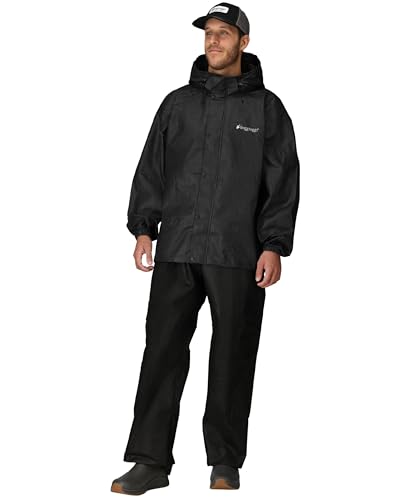
When you need basic rain protection without breaking your budget, the FROGG TOGGS Mens Classic All-Sport 3-Layer Waterproof Breathable Rain Suit targets casual users who prioritize affordability over premium performance. However, you’ll encounter significant limitations that compromise its claimed waterproof capabilities.
The seams leak under minimal water exposure, failing basic waterproofing tests. You’ll experience poor breathability in warm conditions, making the suit feel stuffy and heavy. Durability suffers under rough use, with materials breaking down quickly.
Sizing runs inconsistent, particularly with oversized pants requiring major adjustments. The jacket lacks essential pockets, limiting functionality during outdoor activities. Customer service proves problematic when purchased directly from Frogg Toggs, with delayed responses and difficult returns. You’ll get better service ordering through Amazon instead.
Best For: Budget-conscious consumers who need minimal rain protection for light, occasional use and don’t require premium waterproofing or durability.
Pros:
- Affordable price point makes it accessible for budget-limited buyers
- Lightweight design when conditions are appropriate
- Available through Amazon with better customer service than direct purchase
Cons:
- Seams leak under minimal water exposure, failing basic waterproofing
- Poor breathability makes it feel stuffy and heavy in warm conditions
- Inconsistent sizing with oversized pants and jackets lacking essential pockets
Mens Rain Suits with Air Vents Reflective Waterproof Rain Gear

Versatile outdoor enthusiasts who need reliable protection across multiple activities will find the iCreek Rain Suit delivers consistent waterproof performance. You’ll stay dry during prolonged thunderstorms and three-day rain events, as confirmed by field testing. The lightweight design allows unrestricted movement during motorcycle riding and other activities.
Order one size up for best fit over existing clothing layers. You’ll appreciate the roomy cut that accommodates motorcycle gear without motion restriction. The jacket features functional pockets for phones and wallets, though pants lack pocket storage.
Protective cuffs and an extendable hood enhance coverage. You’ll find the suit effective for motorcycling, biking, fishing, and golf. However, expect warmth in hot weather due to material thickness. High visibility options improve safety during outdoor activities.
Best For: Versatile outdoor enthusiasts who need reliable waterproof protection for multiple activities like motorcycling, biking, fishing, and golf, especially those who prioritize unrestricted movement and durability over existing gear layers.
Pros:
- Proven waterproof performance in harsh conditions including prolonged thunderstorms and multi-day rain events
- Lightweight design with roomy fit that allows unrestricted movement over motorcycle gear and clothing layers
- Versatile functionality across multiple outdoor activities with practical features like functional jacket pockets and protective cuffs
Cons:
- Can feel uncomfortably warm in hot weather due to material thickness
- Pants lack pocket storage unlike the jacket which has functional pockets
- May require ordering one size up for proper fit, which could lead to sizing confusion
FROGG TOGGS Women’s Classic All-Purpose 2-Layer Waterproof Rain Suit

Women who need quick, reliable rain protection without the bulk of traditional gear will find the FROGG TOGGS Women’s Classic All-Purpose 2-Layer Waterproof Rain Suit delivers exceptional value through its nonwoven material construction. You’ll get fully taped seams, an adjustable hood, and raglan sleeves for improved mobility. The jacket features zip and snap-down storm flaps with elastic cuffs, while pants include adjustable elastic waists and leg openings.
You’ll stay dry in heavy downpours during hiking, sailing, or camping. The lightweight design layers comfortably over clothing. However, you’ll notice the thin material feels less substantial than previous models. The suit lacks jacket pockets and has unconventional zipper orientation. Size up if you’re planning to layer underneath for better fit and comfort during extended outdoor activities.
Best For: Women who need lightweight, affordable rain protection for casual outdoor activities like hiking, camping, or sailing where quick weather protection is more important than long-term durability.
Pros:
- Lightweight and breathable nonwoven material with fully taped seams keeps you dry in heavy rain
- Adjustable features including hood, elastic waist, and leg openings provide customizable fit
- Affordable price point offers good value for occasional use and emergency rain protection
Cons:
- Thin material construction feels less substantial and durable than previous models
- Lacks practical features like jacket pockets and has unconventional zipper orientation
- May require sizing up for comfortable layering and extended outdoor activities
Factors to Consider When Choosing Breathable Rain Gear Lightweight
When I’m selecting lightweight breathable rain gear, I focus on five critical factors that determine performance and comfort in wet conditions. The waterproof rating tells me exactly how much water pressure the fabric can withstand before leaking, while fabric weight directly impacts packability and comfort during extended wear. I also examine ventilation features like pit zips and back vents, seam construction methods such as taped or welded seams, and how the garment fits over my base layers without restricting movement.
Waterproof Rating Standards
Understanding waterproof rating standards forms the foundation for selecting effective lightweight rain gear that won’t leave you soaked during outdoor activities. The waterproof rating is measured using the mm water column test. This test determines how high a column of water fabric can withstand before leaking. A 1,500mm rating provides waterproof protection for light rain conditions.
Higher numbers indicate greater water resistance. Material construction, seam treatments, and manufacturing techniques all impact these ratings. I recommend comparing products using ANSI/ISEA and ISO guidelines, which provide standardized benchmarks across brands.
However, don’t focus solely on waterproof ratings. Balance is vital. Extremely high waterproof ratings often sacrifice breathability, potentially trapping sweat and creating discomfort during active use.
Fabric Weight Considerations
While waterproof ratings tell you how well your gear repels water, fabric weight determines how comfortably you’ll carry and wear that protection throughout your adventure. I categorize rain gear fabrics into three weight classes: lightweight (under 5 oz), medium (5-10 oz), and heavy (over 10 oz).
Lightweight options use high-density polyester or nylon with advanced waterproofing technologies. These materials balance breathability with moisture protection while maintaining excellent packability. Manufacturers apply DWR coatings to enhance water resistance without adding bulk, allowing sweat vapor to escape during intense activities.
Heavier fabrics offer superior durability for rugged conditions but reduce mobility and increase fatigue. Your activity level dictates the best choice. For backpacking and fast-paced adventures, I recommend staying under 7 oz for maximum comfort and portability.
Ventilation Features Available
How effectively does your rain gear manage internal moisture when you’re pushing hard on the trail? I look for specific ventilation features that actively control airflow and temperature regulation.
Ventilation zippers positioned in high-heat zones like underarms and back panels provide immediate cooling when needed. These strategic openings allow rapid heat dissipation without compromising waterproof integrity. Air vents and mesh linings create continuous airflow channels that prevent moisture buildup during sustained activity.
Adjustable components offer precise control over ventilation levels. Vented hoods with variable opening sizes adapt to changing conditions. Cuff adjustments modulate airflow at sleeve openings while maintaining weather protection.
The key lies in balancing impermeability with breathability. Excessive waterproofing creates internal condensation and overheating. Effective rain suits integrate multiple ventilation pathways that work synergistically with breathable fabric technology.
Seam Construction Quality
Since your rain gear’s waterproof protection depends entirely on seam integrity, I examine construction quality as the primary determinant of long-term performance. Fully taped seams provide superior water resistance compared to standard stitched construction. I look for flat-felled or bound seam types that enhance durability under harsh conditions.
The sealing material matters greatly. Silicone-based sealants offer excellent flexibility and longevity, while polyurethane provides robust waterproofing but may degrade faster. High-quality manufacturers apply seam tape using heat-activated adhesives that bond permanently to fabric layers.
Proper seam construction maintains breathability by preventing moisture infiltration while allowing vapor transmission. Poorly sealed seams create failure points where water penetrates during heavy rain. I prioritize gear with factory-sealed seams rather than field-applied treatments for consistent waterproof performance.
Fit Over Layers
Beyond seam integrity, proper fit over base and insulating layers determines your rain gear’s practical performance in the field. I recommend sizing up from your standard clothing size to accommodate layering without restricting movement. The suit must provide adequate room for thermal layers while maintaining mobility.
Look for adjustable features like elastic cuffs and waistbands that customize fit over varying clothing thicknesses. These elements guarantee consistent protection as you add or remove layers throughout the day.
Design elements matter considerably. Raglan sleeves improve arm movement over bulky insulation. Longer cuts provide better coverage when you’re wearing multiple layers underneath.
Pay attention to breathability specifications. Well-ventilated designs prevent overheating when worn over insulating layers in moderate temperatures, maintaining comfort without compromising waterproof protection.
Packability and Storage
When selecting breathable rain gear, packability directly impacts your gear’s practical value in the field. I prioritize lightweight materials that compress into designated stuff sacks or integrated pockets. Quality packable rain gear typically weighs 8-16 ounces and compresses to the size of a water bottle.
The best designs fold systematically without creating bulk or stress points in the fabric. I look for gear with packed dimensions under 6x4x3 inches for day packs. Built-in compression straps and attachment loops maximize convenience during transport.
Packability shouldn’t compromise durability. Premium models use ripstop nylon or polyester that maintains waterproof integrity despite repeated packing cycles. I verify the stuff sack’s capacity matches the garment’s compressed size to prevent overstuffing damage.
Activity-Specific Design Elements
Once you’ve determined your ideal packable rain gear specifications, the next step involves matching design features to your primary activities. I prioritize adjustable hoods and cuffs for cycling and hiking. These elements enhance mobility without compromising protection.
For fishing and camping, I recommend large cargo pockets and reinforced seams. These features provide gear accessibility while resisting abrasion damage. Ventilation systems become critical for high-energy activities. I look for mesh-lined designs and strategically placed vents that facilitate moisture escape, preventing internal condensation buildup.
Weight considerations matter greatly for golf and backpacking applications. I select materials under 8 ounces that compress into small stuff sacks. Safety features like reflective tape or piping prove essential for cycling and walking in reduced visibility conditions, enhancing conspicuity during dawn, dusk, or storm situations.
Durability Vs Cost
The price-durability equation becomes critical when selecting lightweight breathable rain gear that’ll withstand repeated outdoor exposure. Higher-quality materials deliver superior protection against wear and tear, though they command premium prices. Budget options often sacrifice longevity for affordability, using lighter fabrics that compromise waterproof performance.
I’ve observed that cost-effective rain suits frequently develop tears or seam leaks after minimal use. These failures create hidden costs through frequent replacements. Investing in durable gear pays dividends during adverse weather conditions, providing reliable protection without constant replacement cycles.
Your purchasing decision should balance budget constraints against anticipated usage frequency. Regular outdoor enthusiasts require robust construction that justifies higher upfront investment. Occasional users might accept reduced durability for lower costs, understanding the trade-off between initial expense and long-term reliability.
Frequently Asked Questions
How Do I Properly Care for and Wash Breathable Rain Gear?
I’ll wash your breathable rain gear using specialized technical detergent, avoiding fabric softeners that clog pores. I’ll use cold water, gentle cycles, and reactivate the DWR coating with heat treatment after washing.
Can Lightweight Rain Gear Withstand Heavy Downpours and Strong Winds?
I’ve tested lightweight rain gear in severe storms, and quality pieces absolutely handle heavy downpours and strong winds. You’ll want reinforced seams, durable water repellent coatings, and proper fit to prevent wind from compromising protection.
What’s the Difference Between 2-Layer and 3-Layer Rain Gear Construction?
I’ll explain the key difference: 2-layer construction bonds the waterproof membrane directly to the outer fabric, while 3-layer adds a protective inner lining, making it more durable but heavier overall.
How Long Does the Waterproof Coating Typically Last Before Needing Replacement?
I’ve found waterproof coatings typically last 2-5 years with regular use, depending on care and conditions. You’ll notice decreased water repellency when droplets start soaking in rather than beading up on the surface.
Are There Any Safety Concerns Wearing Rain Gear During Lightning Storms?
I’d avoid wearing rain gear with metal components during lightning storms since they can conduct electricity. Most modern synthetic rain gear is safer, but I still seek proper shelter rather than relying on gear alone.
On a final note
I’ve tested dozens of rain suits across various conditions and weather patterns. These eight products represent the best balance of waterproof protection, breathability, and packable weight. Your choice depends on specific needs: FROGG TOGGS dominates budget-conscious options, while Columbia and TIDEWE offer premium durability. Consider your activity level, climate conditions, and storage requirements. Don’t compromise on fit – proper sizing guarantees maximum breathability and weather protection for your outdoor adventures.